


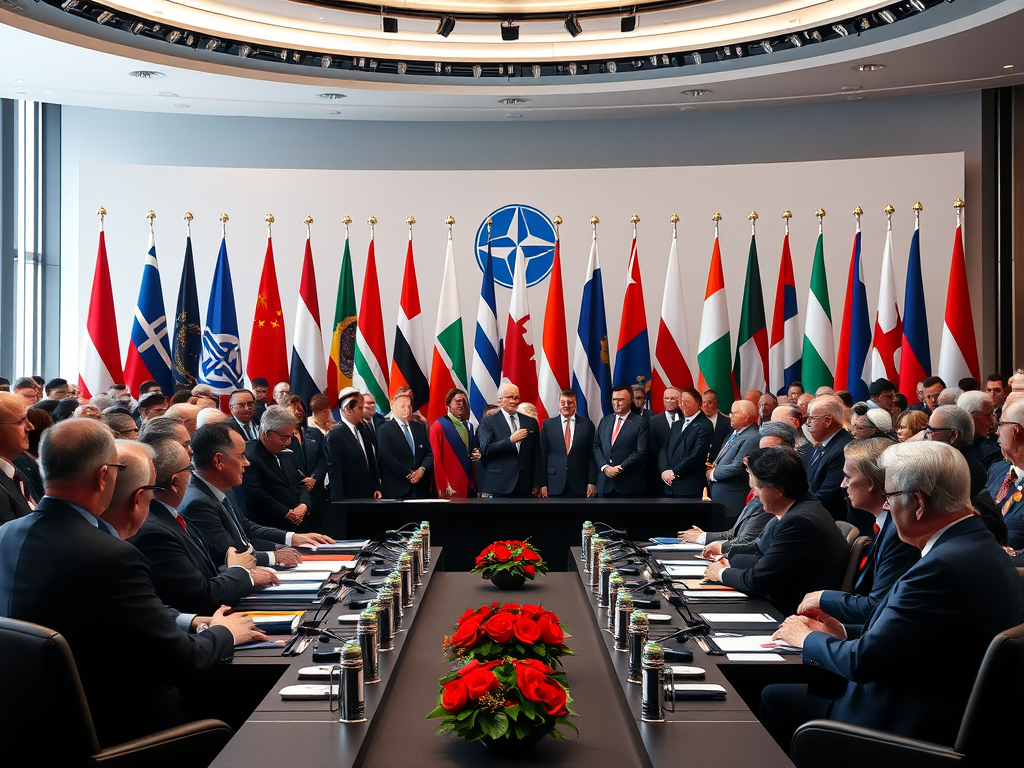
In June 2025, world leaders gathered in The Hague, Netherlands. They met for the NATO Summit 2025. This event marked a turning point in modern international relations. Allies came together to discuss defense spending, emerging threats, and the human consequences of military action.
The summit’s outcomes will shape policies and security strategies for years to come. But it also raised critical questions about the balance between strength and humanity.
A Historic Meeting in The Hague
The Hague has long been known as a symbol of peace and justice. Hosting the NATO Summit there highlighted the importance of international cooperation. Thirty-two member states were represented by heads of government and defense ministers.
This summit was one of the largest in NATO’s history. Leaders used this opportunity to show unity. They wanted to send a clear message to allies and rivals alike. The alliance remains committed to protecting democratic values and ensuring stability.

Reaffirming Collective Defense
One of the core topics was Article 5, NATO’s commitment to collective defense. This principle states that an attack against one member is an attack against all. In recent years, threats have grown more complex. Cyber attacks, disinformation, and hybrid warfare test alliances in new ways.
At the summit, leaders repeated their dedication to stand together. This unity is seen as essential to deter aggression and maintain credibility. Without it, adversaries might doubt NATO’s resolve.
A Major Increase in Defense Spending
A key decision was to raise defense spending to 5% of national GDP. This is a huge increase compared to the earlier 2% goal set after the 2014 Wales Summit. Proponents say higher budgets are needed to modernize forces, improve readiness, and develop new technologies.
They argue that outdated equipment and limited funding have left gaps in defense systems. With rising tensions in Eastern Europe and the Indo-Pacific, many see this investment as urgent.
Critics, however, are concerned. They warn that pouring money into weapons could trigger new arms races. Some citizens fear that social services and education will lose funding to military priorities.
This debate is not new. But today, the stakes feel higher as conflicts escalate and global stability is tested.
Global Security Under Pressure
The summit occurred during a period of growing instability. The war in Ukraine continues to shape Europe’s security landscape. Cyber attacks target hospitals, infrastructure, and election systems. Tensions between China and neighboring countries are increasing.
NATO leaders agreed that stronger cooperation is necessary. They plan to share intelligence, hold joint exercises, and secure critical networks. New task forces will work to protect undersea cables and satellite systems that are vital for commerce and communication.
The Human Cost of Escalation
While military readiness was at the top of the agenda, many voices called attention to the human cost of conflict. Wars are not only fought by soldiers. They affect millions of civilians.
In recent conflicts, entire communities have been uprooted. Schools, hospitals, and homes have been destroyed. The long-term impact on mental health and development is severe.
The Hague Summit became a platform for humanitarian organizations to speak out. They urged NATO members to increase funding for aid and reconstruction. Some leaders agreed to allocate more resources. Others argued that deterrence must come first.
Ukraine: A Central Focus
The conflict in Ukraine remains a defining issue for NATO. Leaders pledged continued support for Ukraine’s sovereignty and independence. More military aid, equipment, and training will flow to help Ukrainian forces defend their territory.
This assistance has made a real difference on the ground. But it has also fueled debate about escalation. Some policymakers warn that more weapons could prolong the conflict or provoke broader confrontations.
European countries are feeling the impact. Millions of refugees have fled Ukraine. Neighboring nations have provided shelter, but resources are stretched thin. Rising energy prices and economic strain add to the pressure.
Balancing support for Ukraine with diplomatic solutions is a delicate task. In The Hague, leaders struggled to find the right approach.
Tensions in the Indo-Pacific
Though Europe was in focus, NATO also addressed the Indo-Pacific region. China’s military expansion has raised alarms among many member states. Protecting trade routes and maintaining freedom of navigation are top priorities.
To respond, NATO plans to strengthen partnerships with nations like Australia, Japan, and South Korea. These relationships are designed to enhance cooperation and prevent conflicts.
Yet, the presence of more military assets in the region comes with risks. Misunderstandings or accidents could escalate into wider crises. Some experts call for robust diplomatic channels to manage tensions before they turn into confrontation.
Cyber Threats: The Invisible Battlefield
Another priority was cybersecurity. In today’s world, attacks do not only happen on land, sea, or air. Hackers can disrupt economies, steal data, and endanger lives without firing a shot.
NATO leaders committed to enhancing cyber defenses. A new Cyber Rapid Response Team will be ready to act against large-scale attacks. Members will share intelligence more quickly to track threats.
Education and training will also expand. The alliance plans to build expertise to stay ahead of evolving technologies. Artificial intelligence, quantum computing, and space assets will all play a role in future conflicts.
NATO Expansion and Enlargement
The topic of NATO expansion returned to the agenda. Some leaders believe that growing the alliance makes everyone safer by creating a stronger collective defense. Others warn that enlargement provokes rivals and increases the chance of confrontation.
At the summit, discussions about new partnerships continued. While no new members were officially accepted, NATO leaders emphasized openness to future applications. The debate over how big NATO should become will remain active for years to come.
Balancing Strength and Compassion
One of the most difficult challenges discussed in The Hague was how to balance strength with compassion. Military power is often seen as essential for deterrence. Yet, without attention to humanitarian consequences, policies can create long-lasting harm.
Leaders agreed that NATO must not lose sight of human rights and international law. They pledged to keep supporting efforts that help civilians recover and rebuild.
Still, many activists argue that words are not enough. They call for measurable action and clear funding commitments. For them, protecting security means investing not only in weapons, but also in people.
Moving Forward: Responsibility and Unity
The NATO Summit 2025 was more than a meeting. It was a moment to decide what kind of world the alliance wants to build.
Decisions about defense spending, partnerships, and emerging threats will shape the next decade. So will choices about humanitarian aid and conflict prevention.
Citizens everywhere have a stake in these outcomes. Policies made in The Hague will influence daily life. They will affect how safe people feel and how nations work together.
Staying informed about these decisions is vital. Understanding the risks and the costs helps everyone hold leaders accountable.
The Hague NATO Summit 2025 was a defining moment for global security. Leaders faced difficult choices about defense, diplomacy, and humanity
They agreed to increase defense budgets and improve cooperation. They also promised to remember the human cost of escalation.
As the world becomes more dangerous, unity will be tested. NATO must prove that strength can exist alongside compassion. The hope is that future summits will focus not only on protecting borders, but also on building peace and supporting those affected by conflict.
The choices made now will echo for generations. How leaders balance power and responsibility will define the future of international relations.

Lascia un commento